Most people plan trips around weather and flight prices. Fewer plan around festivals, which is honestly a missed opportunity — being in a place during its biggest cultural celebration of the year completely changes the experience, in a way that no amount of regular sightseeing replicates. This local festivals travel guide covers events genuinely worth restructuring your travel dates around.
Why Festival Travel Hits Different
Quick answer: Traveling during a major local festival offers access to cultural traditions, food, and community energy that simply don’t exist outside those specific dates — an experience no regular sightseeing itinerary can replicate, though it also usually means higher prices and bigger crowds.
Holi, India — The Festival of Colors
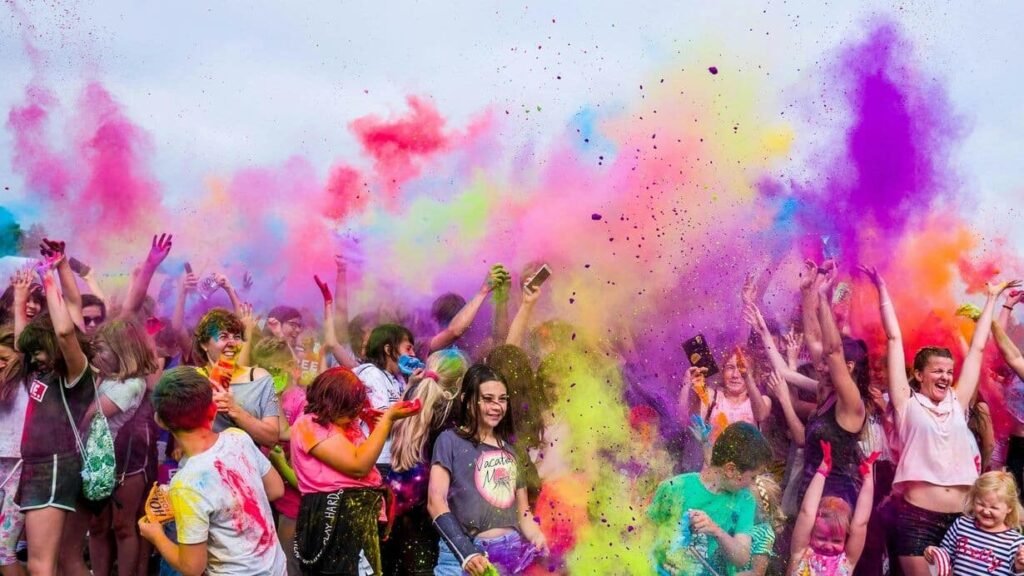
Holi happens in March, marking the arrival of spring, and it’s exactly as chaotic and joyful as the photos suggest — streets full of people throwing colored powder, water balloons, and genuine strangers-turned-friends by the end of the day.
- Best experienced in Mathura and Vrindavan (the traditional epicenter) or Jaipur for a slightly calmer version
- Wear clothes you’re fully prepared to ruin — the color does not wash out easily
- Protect eyes and phones; waterproof pouches are genuinely essential
Songkran, Thailand — New Year as a Nationwide Water Fight
Quick answer: Songkran, Thailand’s traditional New Year (mid-April), transforms entire cities into massive, joyful water fights lasting several days — a tradition rooted in ritual cleansing that’s evolved into one of the most participatory festivals in the world for visitors.
I’ve noticed Chiang Mai specifically runs one of the most intense and prolonged Songkran celebrations, lasting closer to a week compared to the shorter celebrations elsewhere in the country.
Dia de los Muertos, Mexico — A Celebration, Not a Somber Event
Day of the Dead, held around November 1-2, surprises a lot of first-time visitors with how genuinely festive it is — vibrant altars, marigold flowers, painted skulls, and a cultural approach to death that treats remembrance as celebration rather than mourning.
- Oaxaca is widely considered the best city for experiencing traditional Dia de los Muertos celebrations
- Attend respectfully — this remains a genuine, meaningful cultural and family tradition, not a performance for tourists
- Book accommodation months ahead; this period sees significant domestic and international travel demand
Diwali, India — The Festival of Lights
Diwali, usually falling in October or November, transforms cities across India into displays of lights, fireworks, and elaborate home decorations. It’s a deeply meaningful family festival, and visitors welcomed into celebrations often describe it as one of the most memorable travel experiences of their lives.
Quick answer: Diwali celebrations vary regionally across India — Jaipur and Varanasi are particularly renowned for elaborate light displays, while Amritsar’s Golden Temple during Diwali offers a uniquely stunning combination of religious significance and visual spectacle.
Carnival, Brazil — The World’s Biggest Party
Carnival, held in the lead-up to Lent (typically February-March), needs little introduction — Rio de Janeiro’s version is famously massive, but smaller Carnival celebrations across Brazil (Salvador, Olinda) offer a more community-focused, less overwhelming alternative for first-timers.
[link to related guide: Traditional Dishes You Must Try When Visiting Italy]
Practical Tips for Festival Travel
- Book accommodation 3-6 months ahead for major festivals — prices and demand spike hard
- Research whether the festival involves participatory elements (Holi, Songkran) or is more observational (many religious processions) to set expectations
- Respect that many festivals hold deep religious or cultural significance beyond the visual spectacle — approach with genuine curiosity, not just as a photo opportunity
- Expect significantly elevated prices for flights and accommodation during major festival periods
FAQ
What’s the most famous festival in the world for tourists? Carnival in Rio de Janeiro and Holi in India are both frequently cited among the most internationally famous, though Songkran in Thailand has grown enormously in tourist popularity too.
Is it expensive to travel during a major festival? Yes, typically significantly more expensive than off-peak dates — book well in advance to manage costs.
Are local festivals safe for tourists to attend? Generally yes at established, large-scale festivals, though crowded events always carry some inherent risk — stay aware of your belongings and surroundings in dense crowds.
Can tourists actually participate in festivals like Holi or Songkran? Yes, both are genuinely participatory and welcoming to visitors — that’s a core part of their appeal for travelers.
How far ahead should I book travel around a major festival? 3-6 months ahead is a safe minimum for major festivals like Diwali, Carnival, or Dia de los Muertos, given the demand spike.
Conclusion
This local festivals travel guide only scratches the surface — nearly every culture has celebrations worth building a trip around, not just the internationally famous ones. Holi, Songkran, Dia de los Muertos, Diwali, and Carnival each offer something regular sightseeing simply can’t — genuine community energy and cultural immersion on a specific, unrepeatable date. Check festival calendars before locking in your travel dates next time; it might completely change how you experience a place.
Suggested alt text for images:
- “Crowd celebrating Holi festival covered in colored powder”
- “Traditional Dia de los Muertos altar with marigolds and candles”
- “Diwali lights and diyas decorating a street in India”
Route Fit
Match the guide to your timing, mobility, priorities and realistic daily pace.
Proof Check
Recheck current prices, entry rules, operating hours and transport schedules.
Backup Sticker
Keep one alternative for weather, closures, delays or sold-out inventory.
Pack the decision, not just the inspiration.
Use this guide as a planning framework, then confirm live conditions before paying, booking or changing your route.