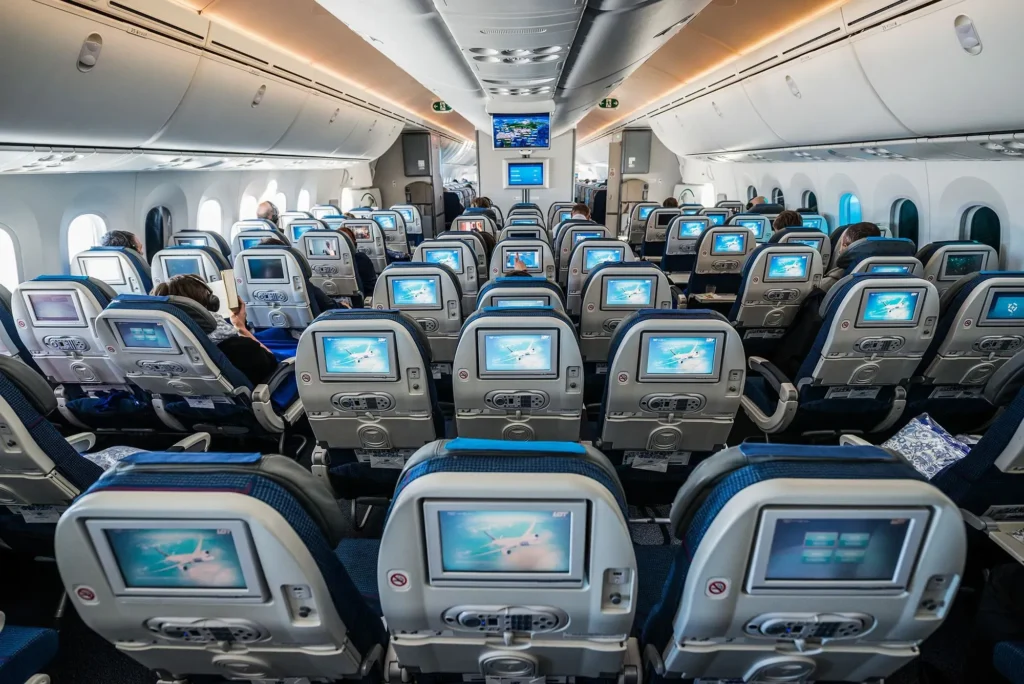
Twelve, fourteen, sometimes eighteen hours in a metal tube with recycled air and someone’s seat reclined into your knees — long-haul flights are rarely fun, but they don’t have to be miserable either. After more long-haul economy flights than I’d like to admit, here are the long-haul flight tips that actually make a difference, not the generic “drink water” advice you’ve heard a hundred times already.
Choosing Your Seat Strategically
Quick answer: For long-haul comfort, aisle seats near the front of economy offer the best balance of easy bathroom access, quicker deplaning, and reduced disruption from other passengers moving around during the flight.
Window seats are nice for sleeping (something to lean on) but mean climbing over people for bathroom breaks. Aisle seats trade a bit of leaning comfort for freedom of movement — on a 12+ hour flight, I’ll take the freedom every time.
- Use SeatGuru or similar tools to check specific aircraft seat maps before booking
- Bulkhead seats have more legroom but no under-seat storage during flight
- Exit row seats offer the most legroom but often can’t recline
What to Actually Pack in Your Carry-On
Picture landing after 14 hours with a dead phone, a dry mouth, and skin that feels like sandpaper — completely avoidable with the right carry-on setup.
- Compression socks (genuinely reduces swelling and DVT risk on long flights)
- A refillable water bottle (fill after security, airplane air is extremely dry)
- Travel-size moisturizer and lip balm
- A neck pillow that actually works for your sleep position (not just the generic inflatable kind)
- Noise-canceling headphones or good earplugs
Managing Jet Lag Before You Even Land
Quick answer: Start adjusting to your destination time zone gradually 2-3 days before departure by shifting sleep and meal times slightly each day — this reduces jet lag severity more effectively than any in-flight trick.
Once you’re on the plane, set your watch to destination time immediately and try to eat/sleep according to that schedule rather than your origin time zone, even if it feels unnatural at first.
Staying Comfortable Physically
- Get up and walk the aisle every 90 minutes to 2 hours — reduces stiffness and circulation issues
- Do simple ankle rotations and calf raises in your seat periodically
- Avoid alcohol on the flight itself — it worsens dehydration and disrupts sleep quality more than it helps relaxation
- Layer clothing — cabin temperature varies a lot and you can’t control it
Food and Hydration Strategy
Airline food is what it is, but you have more control than you think. Skip the free alcohol, drink water consistently (roughly one cup per hour is a reasonable target), and if you have dietary preferences, pre-order a special meal 24+ hours ahead — they’re usually served first and tend to be fresher.
- Bring your own snacks for when airline meal timing doesn’t match your body’s schedule
- Avoid heavy, salty airline meals right before you want to sleep — they disrupt rest more than help
Entertainment and Time Management
Download content before you fly rather than relying on wifi (often spotty or paid on long-haul). I’ve noticed breaking the flight mentally into chunks — “first 4 hours: movie and meal, middle chunk: sleep, final chunk: work or reading” — makes the total time feel far less overwhelming than treating it as one undivided block.
[link to related guide: Essential Packing List for International Travel]
Dealing With a Middle Seat (When You Can’t Avoid It)
Sometimes you just get stuck with it. Noise-canceling headphones become non-negotiable here, and I’d genuinely recommend booking an aisle or window a bit ahead if middle-seat anxiety is a real issue for you — many airlines let you select seats for a small fee even on basic economy fares.
FAQ
Is it worth paying extra for a better economy seat on long-haul flights? Often yes, for flights over 8-10 hours — extra legroom or aisle access genuinely improves comfort, and the cost difference is usually modest compared to overall ticket price.
How do I avoid jet lag on long-haul flights? Adjust your sleep schedule gradually before departure, stay hydrated, avoid alcohol, and get sunlight exposure at your destination as soon as possible after landing.
Should I sleep during a long-haul flight or stay awake? It depends on arrival time — generally, try to sleep according to your destination’s night hours, even if that means staying awake for part of the flight that falls during origin daytime.
Is compression clothing actually necessary for long flights? For flights over 6-8 hours, compression socks meaningfully reduce swelling and lower deep vein thrombosis (DVT) risk, especially for people with any predisposing risk factors.
What’s the best way to deal with a crying baby or noisy passenger nearby? Good noise-canceling headphones handle most of it; beyond that, patience is genuinely the only tool — flight attendants can occasionally help with seat reassignment if seats are available.
Conclusion
Long-haul flights are never going to be genuinely enjoyable, but these long-haul flight tips — smart seat selection, proper hydration, gradual jet lag adjustment, and breaking the flight into mental chunks — turn “miserable” into merely “long.” None of this is glamorous advice, but it’s the stuff that actually holds up over a 14-hour flight, which is more than I can say for most generic packing-list tips floating around online.
Suggested alt text for images:
- “Passenger sleeping comfortably with neck pillow on airplane”
- “Compression socks and travel essentials laid out for a flight”
- “Airplane cabin interior during a long-haul flight”
Route Fit
Match the guide to your timing, mobility, priorities and realistic daily pace.
Proof Check
Recheck current prices, entry rules, operating hours and transport schedules.
Backup Sticker
Keep one alternative for weather, closures, delays or sold-out inventory.
Pack the decision, not just the inspiration.
Use this guide as a planning framework, then confirm live conditions before paying, booking or changing your route.